ABB Distributed Control Systems

Unlocking the Fastest ROI in Automated Processes for Manufacturers

December 19,2024

Why Automation is Key to Industry 4.0 Success

Manufacturers have long understood the value of automating manual processes. From reducing costs to improving quality and enhancing workplace safety, the benefits are undeniable. But as Industry 4.0 becomes the standard, manufacturers face a critical question: which processes should they prioritize for automation?

Since the term “Industry 4.0” was coined in 2011, many manufacturers have adopted a marathon-like approach to digital transformation, focusing on gradual and steady progress. This method has proven effective, especially for companies with limited budgets and without in-house technical expertise.

To maximize success, every automation strategy should consider three factors: the speed of return on investment (ROI), ease of implementation, and the impact on the workforce. Below, we explore three automation opportunities that excel in these areas.


Pick and Place Machines: Simple and Effective Automation

Pick-and-place operations involve repetitive tasks like moving components into position for further processing. These tasks, while monotonous, become hazardous when parts are heavy or in close proximity to dangerous machinery. Automating these processes can significantly improve safety and efficiency.

Robotic arms for pick-and-place tasks are among the most cost-effective automation solutions available. Many models are affordable, require minimal upfront investment, and can be programmed without coding expertise. This makes them accessible to manufacturers of all sizes.

For more demanding applications, such as palletizing, the initial cost is higher. For example, a standard automatic palletizer capable of handling one layer per minute starts at around €140,000, excluding integration and accessories. Additionally, programming and maintenance often require specialist support. Despite the slower ROI compared to simpler pick-and-place solutions, the benefits—such as improved staff safety and reduced risk of repetitive strain injuries—justify the investment in the long term.


Quality Assurance: Boosting Accuracy with Machine Vision

In Industry 4.0, quality assurance (QA) is a non-negotiable step in manufacturing. Yet, traditional machine vision systems—though effective—have been too expensive and complex for many manufacturers, leading them to rely on manual inspections.

Unfortunately, human inspectors are prone to fatigue and errors, especially when checking intricate products like printed circuit boards (PCBs), which may contain dozens of minuscule components. Automating QA processes with modern machine vision technology resolves these challenges, offering consistent defect detection and freeing personnel for more engaging, value-added tasks.

Today, low-code and no-code machine vision solutions are readily available, making it easier for manufacturers to adopt these systems without requiring extensive technical expertise. With these tools, businesses can ensure high-quality production standards while minimizing downtime and errors.


Data Entry: Streamlining Information Management

Accurate and timely data entry is crucial for processes such as predictive maintenance, inventory management, and financial reporting. Manual data entry, however, can be slow, error-prone, and a bottleneck for operations.

Automated data entry systems address these issues by using technologies like optical character recognition (OCR) to capture and process information from diverse sources, including PDFs, emails, and websites. These systems then organize the data into centralized storage platforms, such as databases or spreadsheets.

Popular applications of automated data entry include invoice scanning, audit report preparation, and customer survey analysis. Not only are these systems cost-effective, but they’re also easy to implement and manage. For example, Culverdocs offers a comprehensive data entry package for just £20 per user per month, making automation accessible even for smaller businesses.


Key Considerations for Manufacturers

Manufacturers face pressing challenges, including cash flow constraints, employee retention struggles, and a widening skills gap. By prioritizing automation projects that deliver quick ROI, are easy to implement, and positively impact the workforce, businesses can accelerate their journey to digital transformation.


Embrace Automation for Long-Term Success

Automation offers manufacturers the tools to enhance efficiency, safety, and quality in their operations. By focusing on pick-and-place systems, quality assurance, and data entry—three areas with proven ROI—businesses can make significant strides in their digital transformation journey. Embracing these solutions not only strengthens competitive advantage but also ensures a sustainable future in the era of Industry 4.0.


Hot selling models:

ABB BCU-22 3AUA0000110431

5PP320-0573-39

BMI1003P06A 2000W

ABB C100/0100/STD

DS45K7302-D V0.016

HMIBSCEA53D1L0A

ABB FEA-01 3AUA0000052932

8B0C0160HW00.000-1 . F0 C0160

SGDC-50AJAY16 5KW

ABB 336A4976ATP051

PC3100 5S1AB0004000L0-001

CACR-HR10BAB CACR-HR10BAB8

ABB DSQC406

PAS800 01437

7ML5750-1AA00 SITRANS RD500

ABB SPS02 7760690157

SR085-TT-05-09-223T1-V144

SGMGV-20DDA6H

ABB DSQC223

RED-LION G310R210 AK230547

6PPT30.0702-20B

ABB 3EHL409054R0001 KUB921 A01

AKM65K-ACCNR-B0

KBA IPC 5000 5D5500.06

GE IS200EPSMG1AEC

PSBF521 CMP63S/BK/KY/AK1H/SB1

8LSA36.DA030S000-3

GE IC697CHS750

AB7680-F AK230509

IO110S 8BVI0110HCS0.000-1

GE IC200UDD104

DQ1861A -200 to 1370C

KUKA KRC2 00-130-764 00130764

GE IS200WREAH1ADB

ELMO HAR-12/60-20

6SN2155-2BD11-1BA1

GE IS420ESWAH1A

1045 8V1045.00-1

XD-50-TN V3.30 XD50TN

GE 531X111PSHARG3

GL15-ASSY-E087495 H5711622

VNT 61240-PEGD-AYG1/0001

GE 531X307LTBAKG1

IP241 6ES5241-1AA12

PXT 305 COM-LC KIT

SIEMENS 6DS1300-8AB

DM10/40 36003020 4284942

CPX 2500S952-500128 AK230330

SIEMENS 6ES7315-1AF03-0AB0

6BK1942-1AA00-0AA0 HCS CIM4210

ISEL CVD 3 SYSTEM 352053 0030

SIEMENS 6DD2920-0AR6

RZC01.1-6N005F23

Aspect 04/08 882136 8813 77

SIEMENS 6ES5948-3UR23

RZC01.1-6N011F23

KRC2 00-127-755 00127755

SIEMENS 7KG8000-8AB20/FF

PCI-7356 190975E-06L

80VD100PD.C000-01

SIEMENS 6DR2410-4

6ES7616-2QL00-0AB4

BMH1003P06F2A

SIEMENS 6DS1121-8BB

1797-IE8NF SER. A 95732302

TJI-MC16 CJ1W-PA202

SIEMENS 39RTMCAN 16207-61/10

BNI0098 BNI IOF-3290P02-Z038

ISOFLUX 4451200331 GMD3


News & Blogs

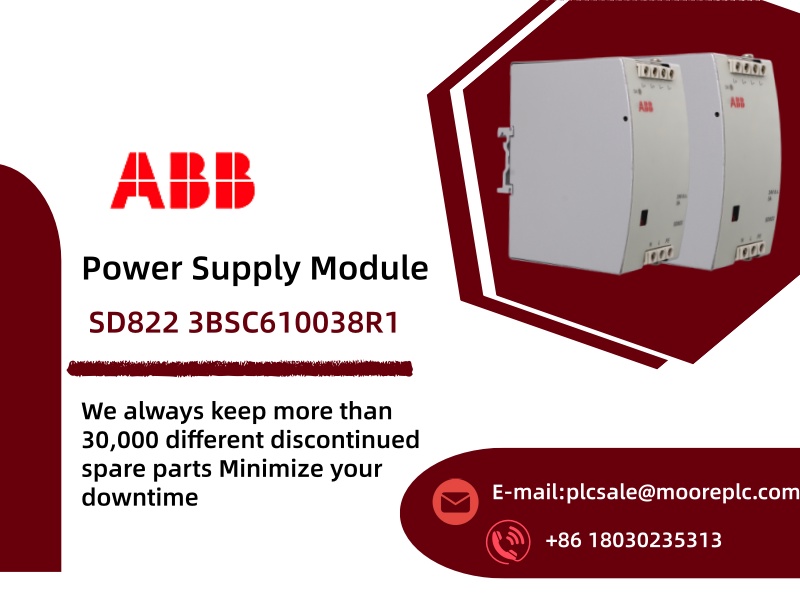
  • ABB SD822 Power Module: Reliable and Efficient Industrial Power 27/02

    2026

    ABB SD822 Power Module: Reliable and Efficient Industrial Power
    What Makes the ABB SD822 Power Supply Module a Reliable Choice for Industrial Systems? The ABB SD822 3BSC610038R1 Power Supply Module is engineered to deliver stable, uninterrupted power to industrial control systems, effectively minimizing the risk of unplanned downtime and critical system failures that can lead to substantial production losses. Its robust mechanical and electrical design is built to withstand the harsh conditions of industrial environments—including extreme temperatures, voltage fluctuations, and mechanical vibration—supporting 24/7 continuous operation. This level of durability makes it an ideal power solution for critical infrastructure where reliability is non-negotiable, such as industrial control panels, automation networks, and mission-critical process systems. Why Upgrading to the ABB SD822 Module Improves Operational Efficiency Upgrading to the ABB SD822 module translates to tangible operational efficiency gains, thanks to its advanced voltage regulation technology and comprehensive protection mechanisms. The module’s precision voltage control ensures consistent power delivery to sensitive control components, minimizing energy loss and optimizing the performance of connected systems. Additionally, its built-in protection features reduce the frequency of equipment malfunctions, leading to lower maintenance costs, fewer unexpected operational interruptions, and smoother, more predictable industrial processes. Over time, these benefits translate to improved productivity and a higher return on investment for industrial operations. Where Can the ABB SD822 Module Make the Biggest Impact? The SD822 power supply module excels in power distribution for industrial control centers, process plants, and automated production systems, where uninterrupted power is a prerequisite for safe and efficient operation. It delivers maximum value in high-stakes environments such as chemical processing plants (where power disruptions can cause hazardous material leaks), power generation facilities (critical for grid stability), large-scale manufacturing lines (to avoid costly production halts), and oil & gas refineries (where equipment failure risks operational safety). Its ability to maintain performance in harsh and demanding settings makes it a cornerstone of reliable industrial power infrastructure. When Should You Consider Replacing Your Current Power Supply? Industrial operations should prioritize upgrading to the SD822 module if they experience frequent system resets, inconsistent voltage output, rising maintenance costs, or aging power supply units (typically those older than 5-7 years). Early replacement is a proactive measure to prevent costly unplanned downtime, protect sensitive control equipment from voltage surges or drops, and avoid cascading system failures. Additionally, if your current power supply struggles to meet the increasing power demands of upgraded automation systems, the SD822’s flexible design ensures it can adapt...
    All News
  • Why Choose the ICS Triplex T8461C as Your Critical DCS Digital Output Module? 02/02

    2026

    Why Choose the ICS Triplex T8461C as Your Critical DCS Digital Output Module?
    Why the ICS Triplex T8461C is a Critical DCS Component Maintaining a high-performance Distributed Control System depends on specifying components that guarantee both reliability and precise integration. The ICS Triplex T8461C digital output module meets this need with engineering focused on durability and control accuracy. Partnering with an established DCS module supplier such as ICS Triplex provides access to genuine, high-specification DCS spare parts. Utilizing the T8461C as a primary Distributed Control System replacement part directly supports operational uptime and system resilience in essential industrial applications. Engineered for Stability in Extreme Conditions The operational environment of a DCS can involve significant thermal and humidity fluctuations. The T8461C is designed to perform consistently within a -5°C to 60°C operating range and can withstand non-operational exposure from -25°C to 70°C. Its performance remains unaffected across a 5% to 95% non-condensing humidity spectrum. This environmental toughness makes it a dependable choice for outdoor installations, unregulated industrial spaces, or any setting where control hardware faces physical stress, thereby reducing failure rates and lifecycle costs. Configurable Voltage Supports Diverse Field Devices A key operational advantage of the T8461C is its wide 18V to 60V DC output range. This adjustability allows a single module type to interface with various actuators, solenoids, and other industrial loads. The benefit is a simplified control cabinet design, reduced need for multiple specialty modules, and a more streamlined inventory of critical Distributed Control System replacement parts. This versatility makes it applicable across different stages of a process or within facilities that operate mixed equipment types. High-Fidelity Control Through Signal Isolation For multi-channel digital output modules, preventing cross-talk is essential to maintain command integrity. The T8461C provides superior isolation, with crosstalk suppression exceeding -40dB. This ensures that signals on individual channels do not interfere with each other, a critical feature for complex sequencing, safety interlocking, and precise timing in automated processes. Such signal clarity is indispensable in sectors like pharmaceuticals or energy management, where output accuracy is non-negotiable. A Strategic Source for System Sustainment Choosing a dedicated DCS module supplier is a long-term decision for system health. ICS Triplex manufactures the T8461C to meet rigorous standards for interoperability and endurance, making it a trustworthy DCS spare parts selection. Implementing this module is a proactive measure that extends the service life of your control architecture, safeguards production consistency, and optimizes total cost of ownership. Industry-Specific Implementations The module's robust feature set makes it suitable for critical sectors: Power Generation: Controls turbine auxiliary systems, pu...
    All News
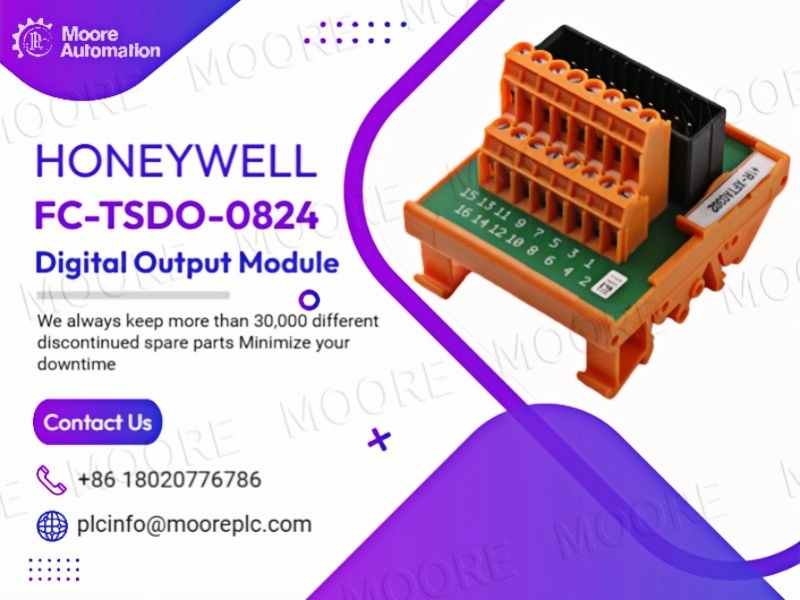
  • How Honeywell FC-TSDO-0824 Supports Smarter Decisions in DCS Spare Parts Management 28/01

    2026

    How Honeywell FC-TSDO-0824 Supports Smarter Decisions in DCS Spare Parts Management
    What the Honeywell FC-TSDO-0824 Means for System Users From a customer’s operational perspective, digital output modules play a quiet but essential role in keeping processes stable. The Honeywell FC-TSDO-0824 Digital Output Module is designed to manage switching tasks reliably through its 8 output channels, each capable of handling up to 36 V DC and 1.5 A continuous current. These specifications allow users to control field equipment confidently in demanding industrial environments. For plants already standardized on Honeywell platforms, compatibility is a major concern. As part of routine DCS spare parts, this module integrates smoothly into existing Distributed Control Systems, helping users avoid unnecessary engineering changes during maintenance or replacement activities. Why Customers Use It as a Replacement Option Many industrial facilities operate control systems that have been in service for years. When output modules begin to fail, customers often seek Distributed Control System replacement parts that can be installed quickly without impacting the wider system. The FC-TSDO-0824 meets this need by offering performance aligned with original system design requirements. From a planning standpoint, customers benefit from predictable replacement solutions. Working with an experienced DCS module supplier ensures that the module delivered matches the required specifications, helping maintenance teams restore normal operations with minimal delay. How This Module Helps Maintain Process Continuity Consistent output behavior is critical for accurate control of actuators, relays, and alarms. The FC-TSDO-0824 is engineered to support stable current delivery, which helps reduce signal fluctuation and improves the reliability of connected devices. This is particularly important for customers operating continuous or safety-sensitive processes. Using standardized DCS spare parts also simplifies daily maintenance work. Familiar hardware shortens troubleshooting time and reduces the likelihood of configuration errors, supporting smoother shift handovers and more efficient plant operation. Which Types of Customers Benefit Most Industries such as oil and gas, power generation, chemical processing, and water treatment rely heavily on dependable digital output control. Customers in these sectors often face strict uptime requirements and limited maintenance windows, making reliable modules a priority. By selecting Distributed Control System replacement parts like the FC-TSDO-0824, these users can modernize specific system sections while keeping the core control architecture intact. This gradual approach supports long-term asset management without major capital investment. How a DCS Module Supplier Influences Outcomes Beyond the product itself, supplier capability has a direct impact on customer experience. A qualified DCS module supplier provides not only genuine Honeywell components but also logistical support and technical insight. This helps customers confirm...
    All News
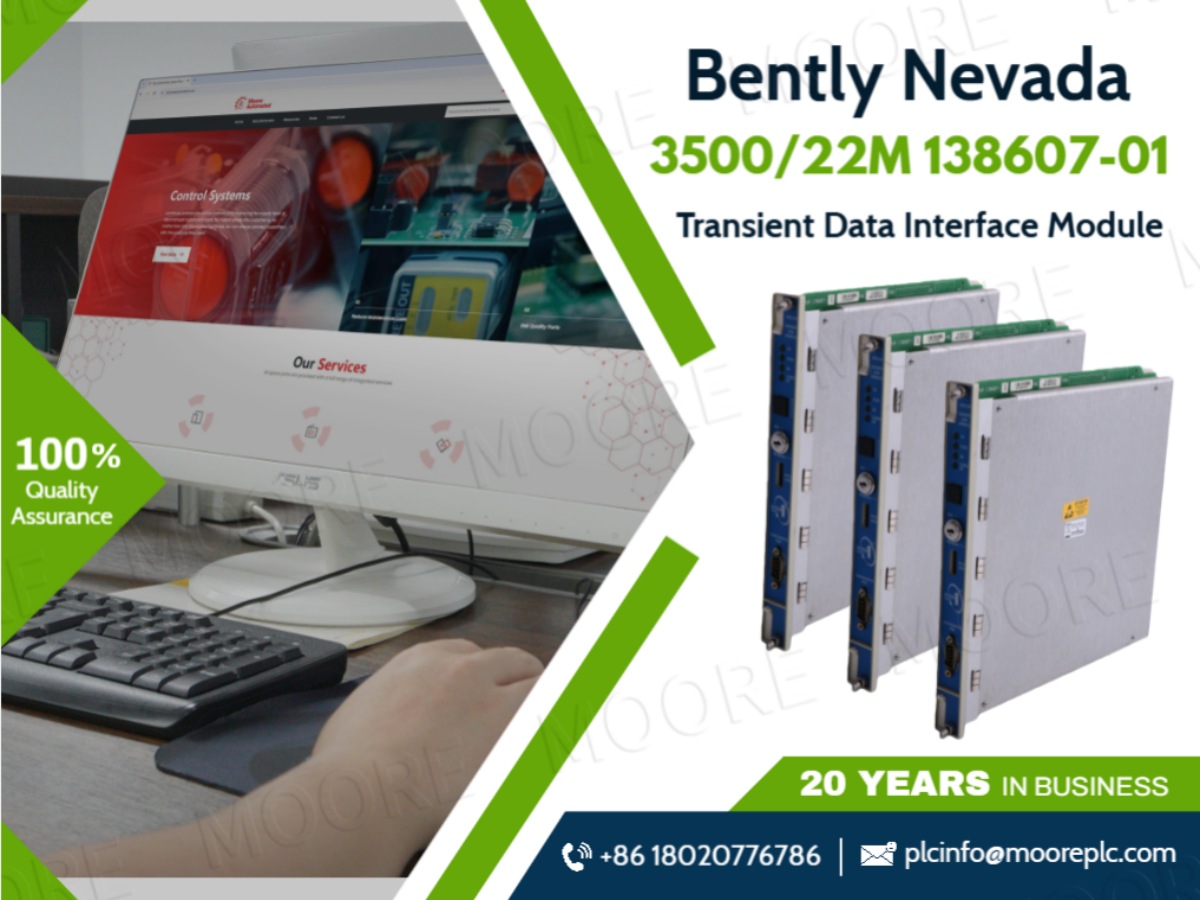
  • How Bently Nevada’s 3500/22M TSI Module Optimizes Industrial Equipment Monitoring 20/01

    2026

    How Bently Nevada’s 3500/22M TSI Module Optimizes Industrial Equipment Monitoring
    Overview of the Bently Nevada 3500/22M 138607-01 TSI Module Within facilities operating critical rotating machinery, continuous condition monitoring is essential for preventing costly failures. The Bently Nevada 3500/22M 138607-01 Transient Data Interface (TSI) Module fulfills this need, operating as a dedicated component within a Turbine Supervisory Instrumentation (TSI) system. By capturing and processing dynamic operational data from equipment, it enables the early detection of mechanical degradation before performance is impacted. This function is key to maintaining asset reliability and operational continuity in mission-critical industrial processes. Durable by design, the module directly supports more strategic maintenance and performance management. Its provision of precise, actionable diagnostics allows facilities to curtail unplanned outages and advance operational productivity across key sectors. Why the Bently Nevada 3500/22M Module is Ideal for Industrial Machinery This TSI module is tailored for the rigorous realities of industrial operation, delivering indispensable oversight for turbine and compressor health. It interprets a comprehensive set of machinery parameters, empowering teams to recognize developing faults during initial stages. Consuming only 10.5 Watts, the unit offers advanced analytical functionality with minimal energy expenditure. Its construction permits reliable service in environments from -30°C to +65°C, with high humidity tolerance. This operational robustness guarantees consistent performance in the most severe plant conditions, enabling round-the-clock condition evaluation and data-driven maintenance planning. Core Features of the Bently Nevada 3500/22M TSI Module A defining feature is the module's ability to connect with an array of sensors monitoring vital machine components, collecting crucial data that informs asset management strategy. Its operational integrity is reinforced through flawless interaction with other Turbine Supervisory Instrumentation components in a unified monitoring scheme. Additionally, the module is architected for simplified incorporation into current monitoring infrastructures. This allows for a straightforward enhancement of diagnostic capabilities, avoiding the need for complex system overhauls and the associated operational interference. How the 3500/22M Module Enhances Preventive Maintenance The module transforms preventive maintenance by delivering continuous evaluation of transient machinery behavior. It alerts operators to subtle changes, such as shifts in vibrational patterns, facilitating corrective measures long before a breakdown might occur. This forward-looking strategy is bolstered by assured access to authentic TSI spare parts, which enables rapid restoration or modernization of the monitoring system. Such proactive oversight directly extends machinery lifespan and dramatically lowers the incidence of disruptive, unscheduled downtime. The Role of the 3500/22M Module in ...
    All News
  • Schneider Electric’s AI Journey: From Lighthouse Factory to Industry Impact 27/02

    2026

    Schneider Electric’s AI Journey: From Lighthouse Factory to Industry Impact
    What is Schneider Electric's "Technology+Scenario" AI Dual Wheel Path? Schneider Electric is promoting the widespread application of artificial intelligence (AI) technology in industrial manufacturing, energy management, and operational scenarios, using "technological innovation+industry scenario implementation" as the dual engine to accelerate the digital transformation of physical industries. The company builds AI solutions through technology research and development, ecological collaboration, and practical scenarios, which not only improve efficiency, reliability, and sustainability, but also create practical value for customers. Schneider Electric's AI strategy not only focuses on algorithm research and development, but also emphasizes deep integration with industrial applications to form replicable industry solutions, allowing customers to quickly understand the actual value of technology implementation.   Why - Why adopt the "technology+scenario" path? In industrial enterprises, the introduction of AI can help companies deal with the complexity and uncertainty of the production process, such as predictive maintenance, energy efficiency optimization, and quality control issues. General AI models are often difficult to directly meet industry needs, so Schneider Electric adopts a "technology+scenario" strategy, closely integrating AI capabilities with specific business scenarios to truly improve production efficiency, reduce energy consumption, and achieve sustainable development, providing customers with practical and feasible solutions while reducing the maintenance pressure of traditional systems.   Where - What key industry scenarios does AI technology cover? Schneider Electric's AI implementation covers intelligent manufacturing, energy management, data center and building management, as well as supply chain and research and development processes. In the context of intelligent manufacturing, AI drives predictive maintenance and production process optimization to improve production line efficiency and equipment reliability. In the field of energy management, machine learning models optimize energy consumption, reduce energy waste, and improve overall system efficiency. In data centers and building management, AI technology optimizes intelligent cooling and power scheduling, simultaneously improving efficiency and sustainability. In the supply chain and research and development stages, AI algorithms are used to optimize design processes and scheduling strategies, improve overall operational efficiency and response speed, and enable customers to achieve quantifiable benefits in each stage.   When - What stage has Schneider Electric's AI landing entered? In recent years, Schneider Electric's AI strategy has entered the stage of scale implementation from the exploration pilot phase. At the recent World Artificial Intelligence Conference (WAIC 2025), the company showcased multiple AI achievements, including smart factory practice...
    All Blogs
  • How HIMA is Integrating AI to Enhance Industrial Safety Systems 04/02

    2026

    How HIMA is Integrating AI to Enhance Industrial Safety Systems
    How AI Enhances Predictive Maintenance Integrating artificial intelligence into safety systems offers significant predictive maintenance benefits. By evaluating real-time sensor and controller information, HIMA’s AI technology can detect early indicators of equipment deterioration or possible malfunctions. This foresight enables maintenance teams to schedule replacements for critical DCS modules ahead of time, avoiding unplanned breakdowns. Such a strategy decreases urgent repairs and limits operational halts. A dependable DCS module supplier plays a vital role by ensuring that necessary Distributed Control System replacement parts are in stock whenever AI forecasts a need, connecting predictive analytics with seamless part procurement. Improving Real-Time Decision Making In high-risk industrial settings, making fast and accurate decisions is crucial. HIMA’s AI continuously scans operational data, offering clear and timely warnings about abnormal situations. This allows personnel to act swiftly, containing potential hazards before they develop into major incidents. Quick access to DCS spare parts further supports this responsiveness, as any compromised components can be exchanged without delay, keeping safety systems fully functional and reducing downtime. Optimizing Operations With AI-Driven Safety Solutions Beyond reinforcing protection, AI helps streamline overall plant performance. HIMA’s solutions observe process variations, track regulatory adherence, and suggest operational refinements. As a result, facilities can boost output while upholding strict safety protocols. Maintaining a relationship with a reliable DCS module supplier ensures that DCS spare parts are available when AI-based monitoring identifies a requirement, allowing prompt maintenance and sustained productivity. Enhancing Long-Term Cost Savings AI-enhanced safety systems contribute to considerable financial savings over time. They lower unexpected stoppages, reduce costly emergency fixes, and prolong the service life of important machinery. Moreover, constant AI surveillance aids in meeting industry safety standards, safeguarding both workers and infrastructure. Partnering with a trusted DCS module supplier guarantees that Distributed Control System replacement parts are easily obtainable, supporting continuous, safe, and cost-effective production while improving return on investment. Conclusion HIMA’s adoption of AI provides clients with strengthened predictive upkeep, instant decision aids, process improvement, and economic advantages. When paired with consistent access to DCS spare parts and Distributed Control System replacement parts via a reputable DCS module supplier, these innovations assist industries in running safer, more efficient, and uninterrupted operations. Hot Recommendations 3500/42M 140734-02 133323-01 1763-L16BWA 149992-01 3500/15 106M1079-01 1756-L84E 3500/05-01-02-00-00-00 ADV551-P10 S2 330101-00-11-10-02-00 NPBU-42C 64011821D AAI841-H00 S2 DSDI120AV1 3B...
    All Blogs
  • How Are Modular Automation Systems Accelerating Factory Retooling? 30/01

    2026

    How Are Modular Automation Systems Accelerating Factory Retooling?
    ransitioning to Platform-Based Design Principles Conventional automation projects often require lengthy custom fabrication, creating delays and integration risks. Modular systems implement a platform strategy where production cells are assembled from certified, interoperable units. Engineers configure solutions using standardized industrial automation parts with unified mechanical, electrical, and data interfaces. This shift from custom design to configuration management dramatically reduces engineering cycles and accelerates deployment from concept to production. Optimizing the Logistics of Maintenance and Repair Traditional facilities face significant operational costs from maintaining diverse inventories for custom machinery. Modular platforms streamline spare parts management by minimizing part variations. Manufacturers can maintain reduced inventories of standardized industrial spare parts that serve across multiple production cells. This consolidation improves inventory turns, reduces warehousing needs, and ensures higher availability of critical components. The simplified logistics directly support faster recovery during both planned upgrades and emergency repairs. Implementing Phased Modernization Strategies Complete production stoppages for system overhauls incur substantial revenue losses. Modular architecture enables targeted modernization where specific functional modules can be upgraded without halting entire lines. This compartmentalized approach allows continuous operation in unaffected areas while new automation modules are integrated. The plug-and-play nature of these systems transforms retooling from a disruptive event into a managed process that maintains production flow. Establishing Pathways for Incremental Technology Adoption Technological obsolescence presents constant challenges for dedicated automation systems. Modular frameworks create structured pathways for continuous improvement. When advancements emerge in sensing, control, or actuation technologies, manufacturers can upgrade individual industrial automation parts without replacing complete systems. This phased adoption extends capital equipment lifespan and ensures production capabilities evolve alongside technological progress. Transforming Capital Expenditure into Operational Efficiency While initial investments require careful evaluation, modular systems demonstrate value through lifecycle efficiency. Reduced engineering requirements, minimized production downtime, optimized spare parts management, and extended equipment utilization collectively lower the total cost of operational changes. This economic model transforms retooling from a capital-intensive project into a sustainable operational practice, enabling more frequent and responsive production adaptations. Conclusion Modular automation represents a strategic evolution in manufacturing methodology, accelerating retooling through standardization and flexibility. By implementing platform-based designs and str...
    All Blogs
  • What Makes ICS Triplex a Game Changer in Safety Control Systems? 22/01

    2026

    What Makes ICS Triplex a Game Changer in Safety Control Systems?
    Reliable Safety for Critical Operations In high-risk industries, even small failures can have major consequences. ICS Triplex’s triple modular redundancy (TMR) ensures that operations continue smoothly, even if a component fails. This built-in reliability allows maintenance teams to focus on preventive care. Customers gain confidence through fewer unplanned shutdowns and compliance with strict safety standards. Long-Term System Support Aging Distributed Control Systems are a common concern for plant operators. ICS Triplex addresses this by offering long-term support and compatibility with existing systems. Customers can upgrade safely without replacing their entire DCS. Additionally, access to dependable Distributed Control System replacement parts ensures that older systems remain functional and efficient, even as components become harder to source. Minimizing Downtime with Redundancy Unexpected stoppages are costly. ICS Triplex reduces risk by allowing continued operation during maintenance or component replacement. Its redundant design keeps production stable and reliable. Partnering with a trusted DCS module supplier gives customers quick access to replacement modules, lowering inventory needs and reducing recovery time when repairs are required. Easier Spare Parts Management Managing DCS spare parts can be challenging, especially for older or discontinued systems. ICS Triplex simplifies this with certified, ready-to-use modules that maintain safety and reliability. For customers, this means predictable maintenance, fewer emergency orders, and peace of mind that performance remains consistent over time. Modernization Without Disruption Many plants prefer incremental upgrades over full replacements. ICS Triplex supports phased modernization, allowing safety controllers to be upgraded independently of the main DCS. Working with a reliable DCS module supplier, customers can integrate ICS Triplex into existing workflows, improving safety and reliability without disrupting operations. Application Areas ICS Triplex is used across industries where uptime and safety are critical, including: Oil and gas (upstream, midstream, downstream) Power generation and utilities Chemical and petrochemical plants Offshore platforms and FPSOs Mining and heavy industry Customers rely on ICS Triplex to protect processes while ensuring consistent access to DCS spare parts and Distributed Control System replacement parts. Hot Recommendations 1747-L553 330881-28-09-080-03-02 1503VC-BMC5 IC693DNM200-BC 330180-X1-CN MOD:145004-13 IS220UCSAH1A 3500/22M 288055-01 330930-065-00-00 IS215UCVEM01A 146031-01 16925-25 T8461C FC-TSDO-0824 9571-30 3500/05-01-02-00-00-01 GX121-TFT8U-F0 MCU1000 SY618 PESK10 6ES54303BA11 SC750
    All Blogs
leave a message
If you are interested in our products and want to know more details,please leave a message here,we will reply you as soon as we can.
submit

Our hours

Mon 11/21 - Wed 11/23: 9 AM - 8 PM
Thu 11/24: closed - Happy Thanksgiving!
Fri 11/25: 8 AM - 10 PM
Sat 11/26 - Sun 11/27: 10 AM - 9 PM
(all hours are Eastern Time)
Contact Us:+86 18030235313

Home

Products

whatsApp

Contact Us